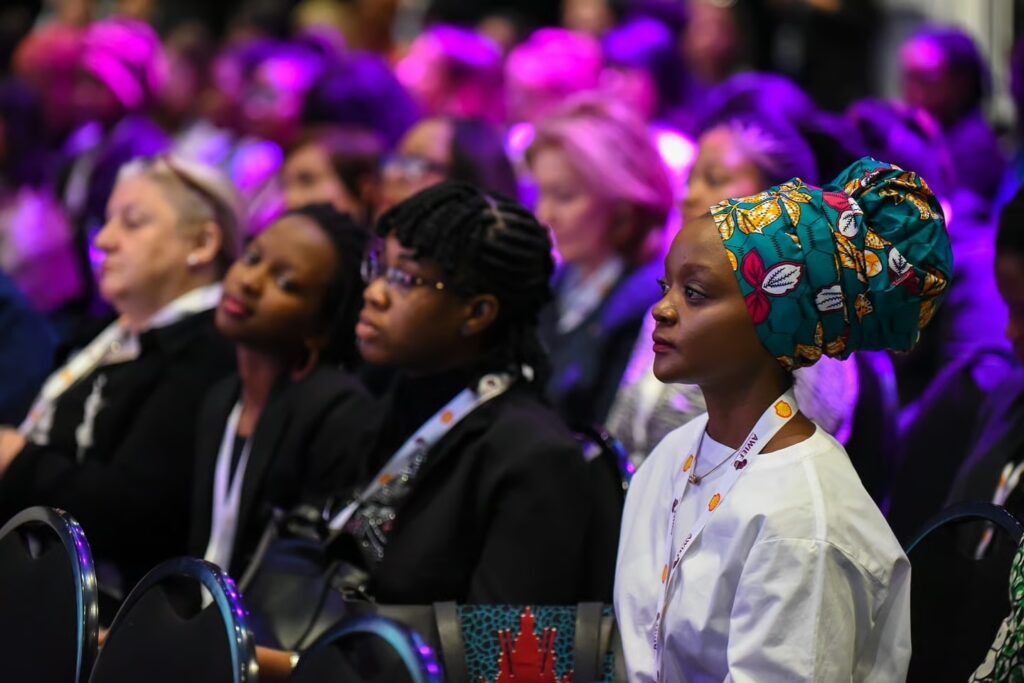
The data is clear: closing gender gaps in entrepreneurship boosts GDP and deepens economic resilience. But to achieve this means moving beyond one-off sponsorships, events and awards towards long-horizon, ecosystem-building partnerships.Across Africa, women are starting businesses at some of the highest rates in the world. They dominate informal trade, drive household resilience, and increasingly lead high-growth ventures in sectors from agribusiness and retail to technology and energy.Yet when you follow the money, the policy, and the power, a different picture emerges: women entrepreneurs remain significantly underfunded, underrepresented in decision-making, and underserved by mainstream support systems. This is not just a social injustice. It is a structural drag on Africa’s growth, innovation, and competitiveness.
“Africa must move from talking about women entrepreneurs to building serious, integrated ecosystems around them”
More than a decade ago, when I founded the Africa Women Innovation & Entrepreneurship Forum (AWIEF), I was driven by a simple conviction: if African women had access to the right skills, networks, markets, and capital, they would not only transform their own lives, but reshape the continent’s economic trajectory.What I did not have then was a playbook for building a pan-African ecosystem, engaging policymakers and investors, and sustaining myself as a leader in a space where gender equality is still contested. Looking back, there are lessons that matter not only for founders like me, but for investors, corporates, and governments that say they want inclusive growth.
They all point to one conclusion: Africa must move from talking about women entrepreneurs to building serious, integrated ecosystems around them.
Ambition is not the problem
When I first spoke about building a pan-African platform dedicated to women’s innovation and entrepreneurship, the idea was often dismissed as ‘too big’ or ‘too idealistic’. In hindsight, that resistance was not a signal to scale back; it was evidence that the work was ahead of its time.
Today, the data is clear. Global and regional analyses consistently show that closing gender gaps in entrepreneurship, labour participation, and leadership would add significant percentage points to GDP and deepen economic resilience.The question is no longer whether women’s economic empowerment matters. The question is whether we are willing to redesign systems to reflect that reality.For investors and policymakers, this requires a mindset shift: transformative ideas around gender equity and inclusive growth will often feel uncomfortable at first. ‘Too ambitious’ usually means ‘too early’ – not ‘wrong’.
Events are not ecosystems
In the early years of AWIEF, it was tempting to measure success by visible activities: a high-profile conference, a successful accelerator cohort, a glamorous awards gala. These are important. They create visibility, convene stakeholders, and inspire.But they are not enough.The real inflection point came when we stopped thinking in terms of isolated programmes and started designing a 360-degree pipeline: skills → networks → markets → capital → advocacy.
Any serious effort to support her must be designed as an ecosystem, not a calendar of eventsWomen entrepreneurs do not experience their journey in silos. The same founder who needs digital skills also needs access to buyers, patient capital, mentors, and a regulatory environment that does not penalise her for being a woman. Any serious effort to support her must be designed as an ecosystem, not a calendar of events.For Africa’s public and private leaders, this means moving beyond one-off sponsorships and short-term projects towards long-horizon, ecosystem-building partnerships.
Capital and partnerships must be values-aligned
In a resource-constrained environment, it is easy to accept any funding or partnership that comes your way. Over time, I learned that misaligned capital can be more costly than no capital at all.The most effective partnerships we have built at AWIEF share three characteristics:
- They see African women as economic actors, not beneficiaries.
- They are willing to fund core, long-term work, not just short-term visibility projects.
- They treat women’s entrepreneurship as strategy, not CSR.
This is where development finance institutions, commercial banks, and corporates have a choice to make. Will they continue to treat women-focused initiatives as peripheral, or will they integrate them into mainstream investment theses, supply chains, and innovation strategies?
Data is not a donor requirement
In the beginning, it is tempting to postpone rigorous impact measurement: ‘We’re still small; we’ll track later’. I wish we had built our data infrastructure from the very first programme.Today, when we talk about AWIEF’s work, we do not only speak about inspiring stories. We speak about:
- Women entrepreneurs supported across many African countries
- Jobs created and sustained
- Revenue growth and export expansion
- Capital mobilised
- Policy and regulatory shifts influenced
For investors and policymakers, this kind of data is not a ‘nice to have’. It is the basis for scaling what works and reallocating resources from what does not. For organisations like ours, it is leverage in negotiations with partners who want to see evidence before they commit.If Africa is serious about women’s entrepreneurship, we must be equally serious about measuring outcomes, not just activities.
The policy interlocutor
Training, mentoring, and funding women entrepreneurs is essential — but it is not enough. Structural barriers in law, regulation, and institutional practice can erase years of individual progress.That is why AWIEF increasingly positions itself not only as a programme implementer, but as a policy interlocutor: engaging governments, regional bodies, and development institutions on issues such as:
- Gender-lens investing and access to finance
- Trade and market access under frameworks like the AfCFTA
- Digital inclusion and future-of-work skills
- Regulatory environments that enable women-owned SMEs to scale
One woman gaining access to capital can transform a business. A policy shift that normalises gender-lens investing can transform an entire generation of entrepreneurs.For serious ecosystem builders, policy engagement is not a side activity. It is central to long-term impact.
Technology, the multiplier Africa cannot ignore
Africa’s scale and diversity make it impossible to rely solely on in-person interventions. Technology is how we ensure reach, continuity, and equity of access.Digital platforms now enable AWIEF to deliver training and mentorship across borders, build communities of practice, match entrepreneurs with investors and buyers, and track longitudinal impact at scale.For investors and corporates, backing tech-enabled, mission-driven platforms is one of the fastest ways to accelerate inclusive growth. For governments, investing in digital infrastructure and affordable connectivity is, indirectly, an investment in women’s entrepreneurship.
Women at the centre is not radical
Perhaps the most important lesson of the past decade is this: placing women at the centre of Africa’s economic agenda is not a radical feminist experiment. It is a rational growth strategy.Every credible analysis – from multilateral institutions to private-sector research – confirms that when women have equal access to resources, markets, and decision-making, economies grow faster, innovation deepens, and communities become more resilient.
When we built AWIEF, it sometimes felt as though we were asking to ‘fit’ women into existing systems. Today, it is clear that the real task is to redesign those systems so that women are fully recognised as the economic leaders they already are.Africa cannot afford to keep treating women entrepreneurs as a side issue. They are central to the continent’s competitiveness, its demographic dividend, and its ability to navigate global shocks.The question now is whether our capital, our policies, and our institutions will finally catch up with their ambition.